

Everest Base Camp Trek
Starting from
US$3599 P/P
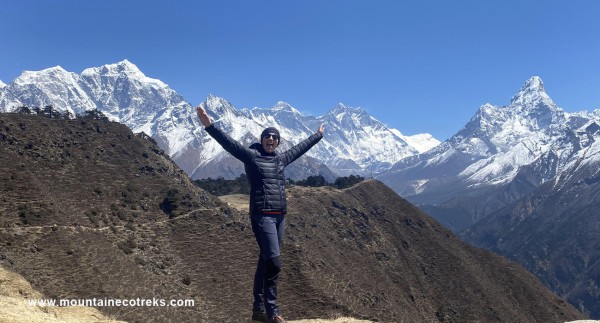
The Everest Base Camp Trek is one of the most iconic adventures in the world. Every year, thousands of trekkers travel to Nepal to walk this legendary trail. The route takes you through the Khumbu region, passing Sherpa villages, ancient monasteries, and breathtaking mountain landscapes. The EBC Trek Nepal offers the perfect mix of natural beauty, Sherpa culture, and personal achievement. Trekkers who want a faster return can choose the Everest Base Camp Trek With Helicopter Return, which adds a thrilling aerial finish to the adventure.
Most trekkers follow the classic EBC Trek itinerary 14 days, starting with a thrilling mountain flight from Kathmandu to Lukla. The route passes through iconic stops including Namche Bazaar, Tengboche Monastery, Dingboche, Lobuche, and Gorak Shep before finally arriving at Base Camp itself. The highlight for many is standing on Kala Patthar viewpoint at 5,545 meters, widely regarded as the best spot for close-up panoramic views of Mount Everest and neighboring Himalayan giants. The trekking route is served by well-equipped teahouse lodges offering warm meals and comfortable beds at every stop. Trekkers seeking extra comfort can opt for the Everest Base Camp Luxury Trek, with premium lodges and private guides throughout.
The difficulty of this trek is rated moderate to challenging. The trail is not technical, but high altitude, long walking days, and changing weather make it demanding. A well-planned trekking package always includes acclimatization days to help your body adjust safely and reduce the risk of altitude sickness. Trekkers with limited time can still experience the Khumbu region with the Everest View Trek, which offers stunning Everest panoramas without the full trail commitment.
The best time to trek to Everest Base Camp is spring from March to May and autumn from September to November. Spring brings stable weather and blooming rhododendrons. Autumn delivers crystal clear skies and sharp mountain views. Winter from December to February offers quiet snow-covered trails for well-prepared trekkers. The monsoon from June to August brings lush green valleys and fewer crowds, making it a rewarding season with the right preparation. The Everest Base Camp Short Trek is ideal for those who want the key highlights in fewer days.
The trek cost depends on package type, group size, and service level. Every trekker must hold a valid trekking permit, including the Sagarmatha National Park entry permit. All EBC Trek 2026 packages include permits and full logistical support. A complete packing list should include layered clothing, a down jacket, waterproof gear, trekking boots, trekking poles, a sub-zero sleeping bag, a water purification system, and altitude medication such as Diamox. Book your Everest Base Camp adventure with Mountain Eco Treks for safety, expert guidance, and an unforgettable Himalayan experience.
The trek is moderately challenging, requiring good fitness and preparation. Daily hikes range from 5 to 7 hours, with proper acclimatization to avoid altitude sickness. No technical climbing is needed, but mental and physical endurance is essential.Here are some highlights of the challenges of the trek.
High altitude and acclimatization:The trek to EBC is at 5,364 m EBC and , Kalapathar at 5,545 m. Altitude sickness is a major concern, gradual ascents and rest days help with acclimatization.
Trek duration and daily distance:Typically 12-14 days of trekking, covering 130 km round trip. Hikers should walk 5-7 hours, 8-18 km, daily.
Terrain and trekking conditions: A mix of steep climbs, rocky treks, suspension bridges and glaciers.
Weather challenges: Temperatures drop below -10°C (14°F) in winter and nights are cold even during peak season. Sudden weather changes and snowfall can make the trek difficult.
Fitness and training requirements: Moderate to high fitness is required; leg strength, and endurance training will help you.It would be beneficial if you have previous hiking experience, but it is not required
Note: Mountain Eco Treks offers this trekking itinerary in three service categorie-Luxury, Standard, and Budget-allowing you to choose the level of comfort that best matches your travel preferences. For a complete breakdown of what each package includes, please visit the Cost Includes and Excludes section
You land at Tribhuvan International Airport and a Mountain Eco Treks team member is already there waiting to bring you to your hotel . The rest of the day is yours - unpack, meet your guide, and get your head in the right place. We handle the paperwork: Sagarmatha National Park Entry Permit and Pasang Lhamu Municipality Entrance Fee, both sorted before morning.
An early flight into Tenzing-Hillary Airport at Lukla (2,860m) is followed by a gentle trail descent along the Dudh Koshi River through Sherpa villages to Phakding (2,610m). The runway landing alone is something people talk about for years. The path from Lukla eases downhill through pine-shaded forest - a deliberate gentle opener while your body begins adjusting to altitude.
Flight Note: Flights operate either direct from Kathmandu or via Manthali Airport (Ramechhap) - a 4-5 hour drive. Peak season (March-May, September-November) flights are mostly routed through Manthali. Mountain Eco Treks will confirm your departure point in advance.
A steady climb through Sagarmatha National Park leads you across the Hillary Suspension Bridge and up to Namche Bazaar - with your first clear view of Everest just before you arrive. The bridge swings high above the roaring gorge and stops most trekkers in their tracks. Namche is warm and busy - a Sherpa market town full of good food, gear shops, and trekkers from everywhere on earth.. You did.
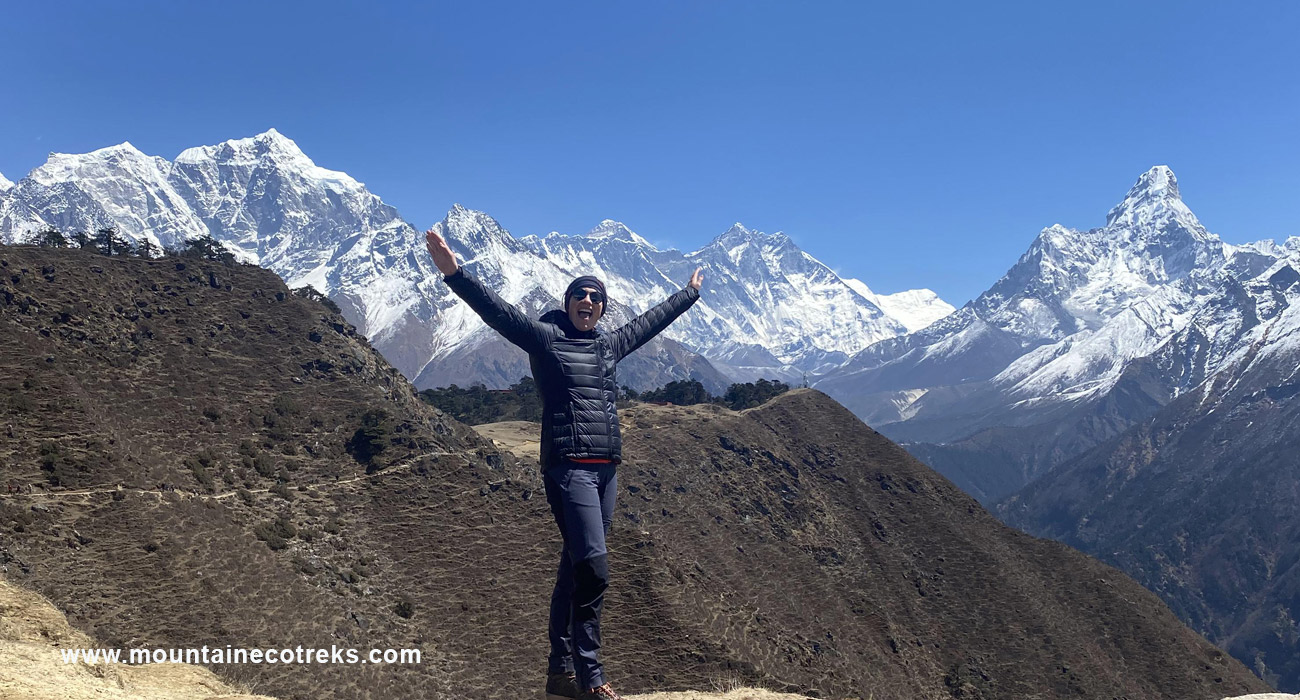
A morning hike up to the Everest View Hotel (3,880m) puts Everest, Ama Dablam, Lhotse, and Thamserku right in front of you - then you come back down to sleep in Namche. Climb high, sleep low - the golden rule above 3,000m, and today you follow it. Back in town the Sherpa Culture Museum is worth an hour and the Saturday market is worth a wander if the timing lines up.
A high contour trail above the valley floor passes through Kyangjuma, Sanasa, and Phunki Thanka before the final climb to Tengboche and its famous monastery. The most important Buddhist monastery in the Khumbu sits ringed by peaks on all sides. Arrive in time for evening prayers and the sound of drums and horns rolling out across the mountains stays with you long after you leave.
The trail descends into the Imja Khola valley, passes through ancient Pangboche, then climbs into open glacial terrain to reach Dingboche (4,410m). Above Pangboche the trees disappear completely and the landscape turns wide and raw - yak pastures, stone walls, and Island Peak (6,189m) rising sharply with Makalu (8,485m) on the far horizon.
A hike up to Nangkartshang Peak (~5,100m) delivers a full 360° view of Makalu, Lhotse, Baruntse, and the Amphu Laptsa - then back down to rest in Dingboche. Tomorrow you cross above 4,900m so today is not optional. Come back down, hydrate, eat well, and let your body do its quiet work overnight.
The trail passes the Thukla Memorial Cairns - stone monuments to climbers lost on Everest - then crosses into raw glacial moraine to reach Lobuche (4,940m) at the edge of the Khumbu Glacier. Almost everyone slows down at the cairns without being asked to. Pumori (7,161m) and Nuptse (7,861m) fill the view from the teahouse windows. Sleep well tonight.
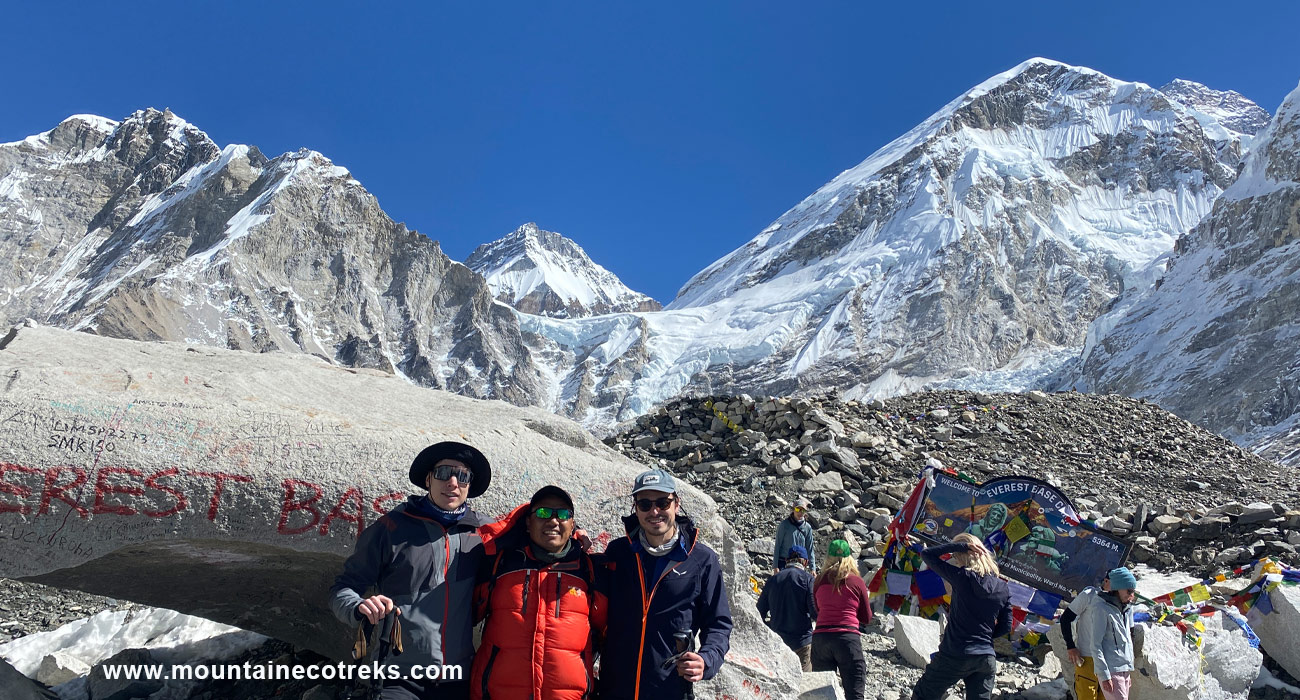
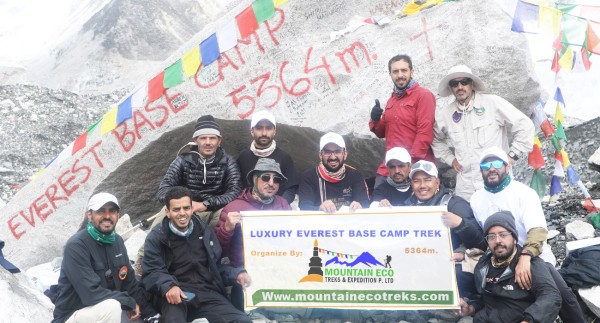
From Gorakshep (5,164m) - the last teahouse stop - you push on across boulder fields and glacial ice to reach Everest Base Camp at 5,364m. You are standing at the foot of the Khumbu Icefall on the same ground every Everest expedition has used since 1953. During spring season, colorful expedition tents spread across the glacier in front of you. Take your time here.ase Camp
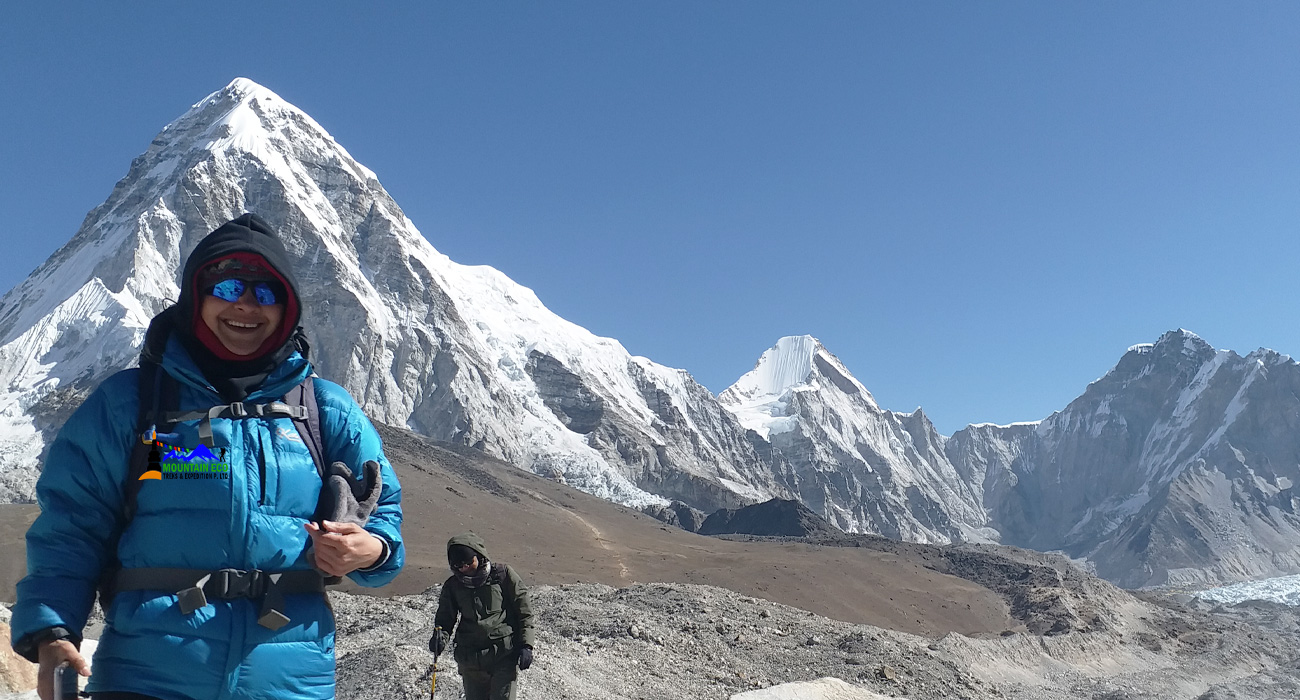
A pre-dawn climb to Kala Patthar (5,545m) - the highest point of the entire trek - rewards you with a sunrise view of Everest (8,848m), Nuptse, Lhotse, and Changtse before a long descent to Pheriche (4,371m). The sky shifts from grey to gold to deep orange as the giants glow above you in a way no photograph ever quite captures. The descent of over 1,100m feels like a reward your lungs have been waiting for.r onward flight. Safe travels - and well done. Not everyone makes it to Everest B
A long descent back through the Khumbu Valley, passing Tengboche and Phunki Thanka, returns you to Namche Bazaar (3,440m). The mountains look different going back - bigger somehow, now that you know what is behind them. The air grows noticeably richer with every hour and by the time you walk into Namche the achievement is starting to settle in.
The longest day by distance runs downhill all the way through Monjo, Jorsalle, and Phakding back to Lukla (2,860m). Lower altitude, greener trail, lighter legs. That evening the entire Mountain Eco Treks team - guides, porters, and trekkers - sits down together for a meal that feels genuinely earned.
One last early morning in the mountains, one short flight, and Kathmandu reappears below you. Transfer to your hotel, clean up, and let it all settle in. The city is the same as you left it - you are not.
Flight Note: Return flight from Lukla operates direct to Kathmandu or via Manthali (Ramechhap), depending on season. Peak season (March-May, September-November) routes via Manthali with a 4-5 hour road transfer. Mountain Eco Treks will confirm your return route in advance.
Mountain Eco Treks arranges your transfer to Tribhuvan International Airport for your onward flight. Safe travels - and well done. Not everyone makes it to Everest Base Camp. You did.
Note: Due to the unpredictable weather at Lukla, flights can sometimes be delayed or cancelled. We recommend having a couple of spare days in case of flight delays. This buffer will help ensure you don't miss your international flight and gives you a chance to relax or enjoy additional activities in Kathmandu.
Service Types
Compare the available package types and choose the service level that matches your comfort, budget, and support needs.
Luxury Package Cost
US$ 3599 per person
Standard Package Cost
US$ 1595 per person
Budget Package Cost
US$ 1285 per person
The Everest Base Camp Trek is one of the world's most iconic trekking routes, leading you to the foot of Mount Everest at 5,364m (17,598ft) in Nepal's Khumbu region. The trail passes through Sherpa villages, ancient monasteries, and dramatic Himalayan scenery inside Sagarmatha National Park - a UNESCO World Heritage Site. It's a walking trek, not a technical climb.
The standard itinerary is 11 to 13 days, starting and ending in Lukla. This includes two essential acclimatization days - at Namche Bazaar and Dingboche - which are critical for safely adjusting to the altitude. Cutting the itinerary short significantly increases the risk of altitude sickness, so it's worth giving yourself the full time.
The trek is rated moderate to challenging. No technical climbing skills are needed, but you will walk 5-8 hours daily on steep, uneven mountain terrain at high altitude. The altitude is the real challenge - not the trail itself. Most healthy, reasonably fit people can complete it with good preparation.
The best seasons are spring (March-May) and autumn (September-November). Spring brings blooming rhododendrons and mild temperatures; autumn delivers crystal-clear skies and the most stable weather of the year. Both are excellent choices. Avoid the monsoon (June-August) and deep winter (December-February) when conditions become much harder.
The full round trip from Lukla to Base Camp and back covers approximately 130km (80 miles). Daily trekking distances range from 10km to 16km depending on the stage, with some shorter days built in specifically for acclimatization.
A fully guided EBC trek package typically costs between USD $1,400-$18,00 per person, covering permits, a licensed guide, a porter, accommodation, and meals during the journey. Budget separately for international flights to Kathmandu, personal gear, travel insurance, and tips for your crew.
Two permits are required: the Sagarmatha National Park Entry Permit (approx. USD $20) and the Khumbu Pasang Lhamu Rural Municipality Permit (approx. USD $20). Both are checked at several points along the route. Your trekking agency will normally arrange these before departure.
Yes - travel insurance is essential and non-negotiable. Your policy must cover high-altitude trekking up to 5,000m and include emergency helicopter evacuation. A rescue helicopter in the Khumbu region can cost over USD $5,000 without coverage. Standard holiday insurance rarely covers this, so always check the fine print before you book.
Expect to spend around USD $40-50 per day on meals, hot drinks, snacks, and Wi-Fi during the journey. Prices are reasonable in lower villages but climb steadily as you gain altitude - by Gorak Shep, even a cup of tea costs noticeably more.
What is altitude sickness and how do I prevent it on the Everest Base Camp Trek?
Altitude sickness (AMS) occurs when you ascend faster than your body can adapt to lower oxygen levels. Symptoms include headache, nausea, dizziness, and fatigue. The best prevention is simple: walk slowly, take your acclimatization days seriously, drink 3-4 litres of water daily, and never push through worsening symptoms. If your condition deteriorates, descend immediately - there's no other safe option.
What fitness level is needed for the Everest Base Camp Trek?
You should be comfortable walking 5-8 hours on uneven terrain before you go. Start training 2-3 months in advancewith regular hiking, running, stair climbing, and cycling. Cardiovascular fitness matters most at high altitude - the stronger your lungs and legs, the more you'll enjoy the journey.
Can beginners do the Everest Base Camp Trek?
Yes - many first-time trekkers complete EBC every year. No technical skills are required. What matters most is physical fitness, a steady pace, and having a knowledgeable guide who understands altitude. With the right preparation and support, it's a very achievable goal for beginners.
Is there an age limit for the Everest Base Camp Trek?
There is no official age restriction. Trekkers from their teens to their late 70s have successfully reached Base Camp. Good health and fitness count for far more than age. If you have any underlying medical conditions, consult your doctor before booking.
Should I take Diamox for the Everest Base Camp Trek?
Diamox (acetazolamide) can help reduce the risk of altitude sickness, but it's not a substitute for proper acclimatization. It also comes with side effects. Talk to your doctor before the trek - they can advise whether it's appropriate for you and recommend the right dosage if so.
Where do trekkers sleep on the Everest Base Camp Trek?
Accommodation is in teahouses - family-run guesthouses that provide a bed, hot meals, and a warm common room. Rooms are basic but clean, typically twin-sharing. Wi-Fi and hot showers are available in most villages along the route for a small extra charge. Think cozy and authentic rather than luxurious.
Dal bhat - Nepal's staple of lentils, rice, and vegetables - is the best fuel during the journey and comes with unlimited refills at most teahouses. Menus also include pasta, noodle soup, eggs, pancakes, fried rice, and momos. Good variety throughout, though choices narrow and prices rise higher up.
Wi-Fi is available in most teahouses along the route for a small fee. Mobile coverage via Ncell and NTC networks works in most villages. Signal weakens at higher elevations but you'll generally stay connected throughout the main trail without too much difficulty.
Yes. Most teahouses have charging points in the common room, sometimes for a small fee of USD $4-$8. A portable power bank is worth carrying for the higher, more remote sections where access to sockets may be limited.
Key items include: layered clothing (base layer, fleece, down jacket, waterproof shell), sturdy broken-in trekking boots, trekking poles, a headlamp, UV sunglasses, high-SPF sunscreen, water purification tablets, a basic first aid kit, and a 25-30L day pack. Pack light - a porter can carry your main bag up to around 10kg.
Water from glacial streams along the route is generally clean, but always treat it with purification tablets or a filterbefore drinking. Carry a reusable bottle and aim for 3-4 litres per day - staying well hydrated is one of the most practical ways to reduce altitude sickness risk in the Khumbu.
A guide is not legally required on this route, but most experienced trekkers would tell you it's worth it. A good local guide knows how to read altitude symptoms early, handles logistics on the ground, and adds real depth to the cultural experience in the Khumbu. In a remote mountain environment, that kind of support matters.
The highest point is Kala Patthar at 5,545m (18,192ft) - not Base Camp itself. Most people are surprised to learn that Everest's summit is actually hidden from Base Camp by the surrounding peaks. Kala Patthar gives you the most famous, unobstructed view of Mount Everest, and arriving there at sunrise is one of the standout moments of the whole trip.
Most trekkers fly from Kathmandu to Lukla - a scenic 30-35 minute mountain flight. During peak seasons (spring and autumn), many flights are redirected to Ramechhap (Manthali Airport), which involves a 4-5 hour drive from Kathmandu, often departing as early as 2:00 AM. The Ramechhap to Lukla flight takes just 15-20 minutes and tends to be more reliable during busy seasons. Always keep a buffer day in Kathmandu for possible weather delays.
Solo trekking is permitted in the Everest region. Many independent trekkers do it each year. That said, having a guide is genuinely useful at high altitude - not just for navigation but for monitoring health, handling delays, and communicating with locals. Whether you go solo or guided is a personal choice, but it's one worth thinking through carefully before you decide.
We're a Nepal-based trekking company with strong local knowledge of the Khumbu, licensed guides, full permit and logistics support, and a focus on responsible, low-impact trekking. We offer private and group EBC trek packages built around your schedule and pace. If you have questions before booking, we're always happy to talk it through.
Have more questions about the Everest Base Camp Trek? Get in touch with Mountain Eco Treks - we're glad to help.
Before you book anything, there are a few things worth knowing. The trek takes between 12 and 14 days. You will sleep in teahouses, eat simple meals and walk 5 to 7 hours a day. The biggest challenge is not the terrain - it is the altitude. You will need permits, travel insurance and ideally a licensed guide. The good news is that thousands of people from all over the world complete this trek every year, including first-timers, solo travellers and people over 60.
When you land in Kathmandu, your trek has not started yet but your preparation has. Here is what to take care of in the city before you head to Lukla:
Kathmandu is also your chance to visit a pharmacy, stock up on snacks and make sure your travel insurance is active.
Most international trekkers fly into Tribhuvan International Airport in Kathmandu. Airlines from across Asia, Europe and the Middle East connect regularly to Kathmandu. Once in Kathmandu, you will take a separate domestic flight to Lukla, which is the starting point of the trek. This domestic flight is short - around 25 to 35 minutes - but it is one of the most talked-about parts of the whole journey. Book your international flights well in advance during peak season, especially for October and November departures.
The flight from Kathmandu to Lukla is unlike any other. Tenzing-Hillary Airport in Lukla sits at 2,860 metres and has a short runway that ends at a mountain wall on one side and drops into a valley on the other. The flight is weather-dependent and can be delayed or cancelled at short notice. Most flights depart early in the morning to avoid afternoon clouds. During main season, some flights are rerouted from Ramechhap Airport, which requires an early morning drive of around 4 to 5 hours. Always build at least one buffer day into your itinerary for potential delays.
Luggage allowance on Lukla flights is strict. Most airlines allow around 10 to 15 kilograms of checked baggage and 5 kilograms of hand luggage. Extra weight is charged per kilogram. Keep your main trekking bag within limits and consider leaving non-essential items at your Kathmandu hotel. Flight delays are common due to mountain weather, so stay flexible with your schedule. The airport itself is small and basic - there is a waiting area, a small café and not much else. Arrive early, stay calm and enjoy the view.
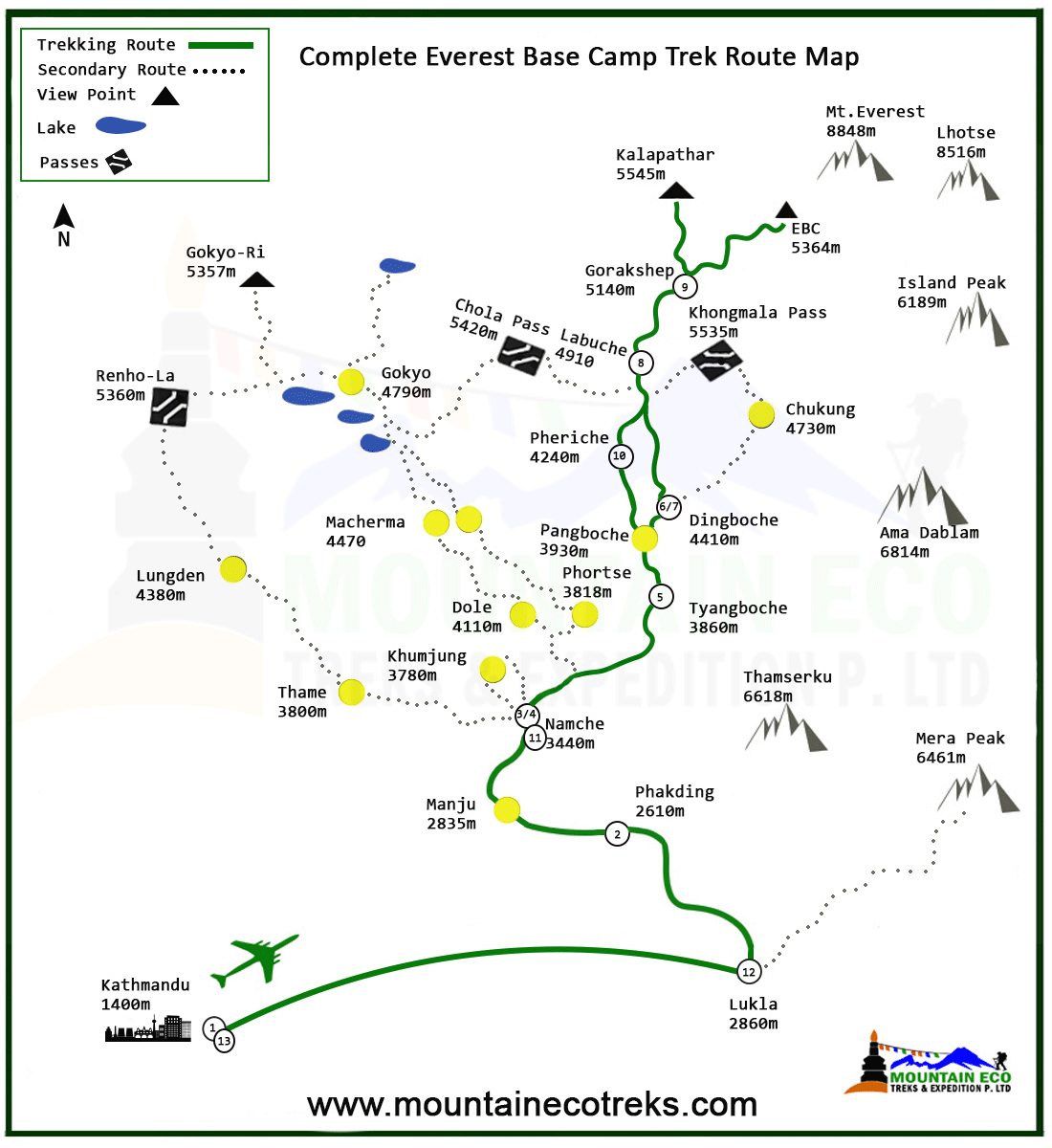
The trek follows a well-established route through the Khumbu region of Nepal. Starting from Lukla, you walk through a series of villages, each one higher than the last.
| Stop | Altitude |
|---|---|
| Lukla | 2,860m |
| Phakding | 2,610m |
| Namche Bazaar | 3,440m |
| Tengboche | 3,860m |
| Dingboche | 4,360m |
| Lobuche | 4,940m |
| Gorak Shep | 5,140m |
| Everest Base Camp | 5,364m |
| Kala Patthar | 5,545m |
Each stop has teahouses, food and basic facilities. Namche Bazaar and Dingboche are the two main acclimatization stops where you spend an extra rest day.
The standard trek takes 12 to 14 days depending on your itinerary and pace. You will walk between 5 and 7 hours each day over varied terrain. The highest point most trekkers reach is Kala Patthar at 5,545 metres. The total round trip distance is around 130 kilometres. The difficulty is rated moderate to challenging - not because of technical terrain but because of altitude. Above 4,000 metres your body works harder with less oxygen, making even simple uphill sections feel demanding. The key is to go slow, stay hydrated and never skip your acclimatization days.
If you are short on time, Mountain Eco Treks also offers the Everest Base Camp Short Trek - a condensed version of the classic route designed for trekkers with a tighter schedule who still want to experience the magic of the Khumbu valley.
The total cost depends on how you travel, who you book with and what is included in your package.
| Trek Style | Estimated Cost |
|---|---|
| Budget independent | $1,2000 - $1,400 |
| Standard guided package | $1,400 - $2,500 |
| Premium guided trek | $2,500 - $3,500 |
| Luxury lodge trek | $3,500 - $4,500 |
A standard guided package typically covers your guide, porter, teahouse accommodation, most meals, permits and the Lukla flight. International flights, Nepal visa fees and personal expenses are always extra.
For trekkers who want a more elevated experience, Mountain Eco Treks offers the Everest Base Camp Luxury Trek - featuring premium lodge accommodation, smaller group sizes and enhanced services throughout the route. For those who want to skip the return walk and fly back in style, the Everest Base Camp Trek With Helicopter Return is one of our most popular options, combining the full trek experience with a breathtaking helicopter flight back to Kathmandu from Gorak Shep.
Most trekkers budget for the package cost and forget about everything else. Here is what catches people off guard:
Budget an extra $300 to $400 on top of your package cost to cover these comfortably.
Tipping is not mandatory but it is a deeply appreciated tradition on the EBC trail. Your guide and porter work extremely hard in tough conditions and tips make a real difference to their income.
Collect tips in an envelope at the end of the trek and present it as a group if you are travelling with others. Tip in Nepali Rupees or US Dollars - both are welcome.
Tea houses are small family-run guesthouses that line the entire EBC route. They are basic but warm in spirit. You will share a dining room with other trekkers, gather around a central stove in the evenings and order from a simple menu. Rooms are small with twin beds, a thin mattress and a blanket. Walls are thin so earplugs are useful. Standard accommodation is also available along the route but options depend on your budget - the higher you go, the more basic and limited the choices become. At lower elevations teahouses are quite comfortable. At higher altitudes like Lobuche and Gorak Shep they become more basic with fewer facilities. It is all part of the experience - and honestly, after a long day of trekking, even the simplest bed feels like a luxury.
This is one of the most searched topics for a reason. Here is the honest picture:
The food on the EBC trail is surprisingly varied. Every teahouse carries a menu with both local Nepali dishes and Western options. Dal Bhat - lentil soup with rice and vegetable curry - is the most popular meal on the trail and often comes with free refills. Beyond that you can expect noodle soup, fried rice, pasta, pizza, momos, omelettes, pancakes and Sherpa stew. Meals become simpler and more expensive as you gain altitude because everything is carried up on foot. Breakfast is typically served between 7 and 8 in the morning, giving you enough time to eat well before the day's walk begins.
Generally yes, but with a few sensible precautions. Stick to vegetarian meals at higher altitudes since meat is often carried without refrigeration and can cause stomach problems. Freshly cooked hot meals are your safest option. For water, do not drink straight from taps or streams. Safe options include boiled water from teahouses, bottled water or water treated with purification tablets or a filter bottle. Boiled water from teahouses costs around $1 to $2 per litre and is the most practical option. Staying well hydrated is one of the best ways to prevent altitude sickness so drink at least 3 to 4 litres a day.
Good news - the EBC trail is very vegetarian-friendly. Dal Bhat, vegetable noodle soup, fried rice, pasta, omelettes, pancakes and vegetable curry are available at almost every teahouse. Vegans will find it slightly harder but still very manageable. Most teahouses can prepare meals without dairy or eggs if you ask clearly. Carry some of your own snacks like nuts, energy bars and dried fruit for the longer walking days. Tell your guide about your dietary needs before the trek so they can communicate with teahouse owners along the route.
Nepal updated its trekking regulations in recent years and there are a few important changes every trekker must know before arriving.
Mountain Eco Treks will handle all permits on your behalf. Total permit cost is approximately $40
The Everest Base Camp Trek can be done in any season and each one offers a completely different experience.
Spring (March to May) is warm with blooming rhododendrons and active Everest summit expeditions on the upper mountain. One of the two most popular seasons.
Autumn (September to November) offers the clearest skies and the best mountain views of the year. October is the single busiest and most recommended month on the trail.
Winter (December to February) is cold and challenging at altitude but rewards trekkers with quiet trails, crisp clear skies and stunning snow-covered landscapes. Well-equipped and experienced trekkers will find it a beautiful and peaceful time to go.
Monsoon (June to September) brings heavy rainfall and lush green valleys. The trail is quieter, prices are lower and the scenery is dramatic. Trekkers who are comfortable with rain and occasional leeches on lower sections can still enjoy a rewarding experience during this season.
| Spring (Mar - May) | Autumn (Sep - Nov) | |
|---|---|---|
| Weather | Warm, some cloud | Clear and stable |
| Views | Good | Best of the year |
| Crowds | Busy | Very busy |
| Trail | Rhododendrons in bloom | Dry and clear |
| Expeditions | Everest summit season | Quieter on upper mountain |
If clear mountain views are your priority, choose autumn. If you prefer a slightly warmer trek with beautiful wildflowers on the trail, spring is a wonderful choice.
Altitude sickness, also known as Acute Mountain Sickness or AMS, is the single biggest health risk on the EBC trek. It occurs when your body does not get enough time to adjust to lower oxygen levels at high altitude. Symptoms include headache, dizziness, nausea, loss of appetite, fatigue and difficulty sleeping. It can affect anyone regardless of age or fitness level. The golden rule is simple - if symptoms appear, do not go higher. Rest at your current altitude or descend immediately if symptoms worsen. Never ignore altitude sickness hoping it will pass on its own.
Proper acclimatization is what separates trekkers who make it to Base Camp from those who have to turn back. The principle is straightforward - go up slowly and give your body time to adjust.
You do not need to be an athlete but you do need a solid base of fitness. The trek involves long days of walking on uneven terrain at altitude where your body works harder than normal. If you can comfortably walk for 5 to 6 hours with a light daypack, climb stairs without stopping and go on long hikes on weekends, you are in a good starting position. Building cardiovascular fitness through running, cycling or swimming in the months before your trek will make a significant difference to how much you enjoy the experience rather than just survive it.
| Trekking Route (Day-wise) | Distance in Kilometers | Trek Duration (Hours) | Altitude in Meters |
|---|---|---|---|
| Lukla to Phakding | 8 km | 3–4 hours | Phakding 2,610 m |
| Phakding to Namche Bazaar | 10.5 km | 6–7 hours | 3,440 m |
| Namche Bazaar to Tengboche | 9.5 km | 5–6 hours | 3,867 m |
| Tengboche to Dingboche | 8.5 km | 5–6 hours | 4,410 m |
| Dingboche to Lobuche | 7 km | 4–5 hours | 4,940 m |
| Lobuche to Gorakshep | 4.5 km | 3–4 hours | 5,164 m |
| Gorakshep to EBC | 3.5 km | 3–4 hours | 5,364 m |
| Gorakshep to Pheriche | 12 km | 6–7 hours | 4,371 m |
| Pheriche to Namche Bazaar | 19 km | 6–7 hours | 3,440 m |
| Namche Bazaar to Lukla | 18.5 km | 6–7 hours | 2,860 m |
Everest Base Camp is not a technical climb. There are no ropes, no ice axes and no mountaineering skills required. It is a long, high-altitude hike and thousands of first-time trekkers complete it every year. What you need is a reasonable level of fitness, the right gear, a good guide and a willingness to go at your own pace. Most people who do not make it to Base Camp turn back because of altitude sickness - not because the terrain was too hard. Choose a sensible itinerary with proper acclimatization days, listen to your body and you have every reason to reach the top.
If you want a gentler introduction to the Everest region before committing to the full trek, the Everest View Trek is a wonderful option. It takes you through the heart of the Khumbu valley with breathtaking views of Everest and the surrounding peaks without reaching the same altitude as Base Camp - perfect for beginners or those with limited time.
Solo trekking to Everest Base Camp is popular and generally safe. The trail is well-marked, busy during peak season and passes through villages with teahouses every few hours. For solo female trekkers, the EBC route is considered one of the safer treks in Asia. The Sherpa communities along the trail are welcoming and respectful. That said, trekking with a licensed guide is strongly recommended for safety at altitude regardless of gender. Joining a small group trek is also a great way to share the experience, reduce costs and have company on the trail.
Packing right makes the trek significantly more comfortable. The most important items are:
Most gear can be bought or rented affordably in Kathmandu if you prefer to travel light.
Travel insurance is not optional on this trek - it is essential. A helicopter evacuation from high altitude can cost between $6,000 and $9,000 without coverage. Your policy must specifically cover high-altitude trekking up to at least 6,000 metres and emergency helicopter rescue. Many standard travel insurance policies do not cover high-altitude activities so read the fine print carefully before purchasing. The cost of a good high-altitude trekking policy is typically between $100 and $200 - a small price compared to the potential cost of an emergency without it.
Nepal offers visa on arrival for most nationalities at Tribhuvan International Airport in Kathmandu. The process is straightforward:
Bring US Dollars in cash as payment - it is the most widely accepted foreign currency at the airport.
The Everest Base Camp Trek is not just a physical journey - it is a deeply human one. The Sherpa people of the Khumbu region have lived in the shadow of these mountains for centuries. Their warmth, resilience and connection to the land give the trail its soul. Along the route you will pass mani stones carved with Buddhist prayers, spin prayer wheels at monastery gates and walk beneath strings of colourful prayer flags snapping in the mountain wind. Tengboche Monastery, sitting at 3,860 metres with Everest as its backdrop, is one of the most spiritual places many trekkers will ever visit. Take your time here. It is about much more than reaching Base Camp.
| Everest Base Camp | Annapurna Base Camp | |
|---|---|---|
| Duration | 11 to 14 days | 7 to 10 days |
| Max Altitude | 5,364m | 4,130m |
| Difficulty | Moderate to challenging | Moderate |
| Altitude Risk | Higher | Lower |
| Best For | Bucket list, high altitude | First timers, shorter trip |
| Cost | Higher | Lower |
If standing at the base of the world's highest mountain is your dream, Everest Base Camp is the one. If you want stunning scenery with a shorter, lower and slightly easier trek, Annapurna Base Camp is a brilliant choice. Either way, Nepal will not disappoint.
If you are ready to go beyond the classic route, Mountain Eco Treks also offers some of the most rewarding extensions and alternatives in the Everest region:
Everest Base Camp with Gokyo Lake Trek - combines the classic EBC route with the stunning turquoise lakes of the Gokyo valley for a truly complete Khumbu experience.
Gokyo Lake Trek - a quieter and equally spectacular alternative to the standard EBC route, taking you through remote valleys to the sacred Gokyo Lakes with panoramic views of four 8,000 metre peaks.
Everest Three High Passes Trek - the ultimate Everest region challenge, crossing the Kongma La, Cho La and Renjo La passes for experienced trekkers who want to see the full scale of the Khumbu in one incredible journey.
Whichever trek you choose, our team is here to help you plan every detail from Kathmandu to the summit view and back home safely.
You May Also Like
US$3599 P/P
US$3950 P/P
US$1899
US$1995
P/P
US$1580 P/P
US$3875 P/P
US$3295 P/P
US$1550
US$1685
P/P
US$1695
US$1899
P/P
Experience the best of Nepal with expert local guides, carefully planned itineraries, and personalized support from enquiry to departure. Tell us what you want to explore and we will help you build the right trip.
Call us: +9779803926665
Enquire on WhatsApp© 2011 - 2026 All rights reserved. Mountain Eco Treks & Expedition




HannahmO123
Australia
Professional, fun, amazing!
20 Oct 2018
Ram and Neil led our group of 6 to Everest Base Camp and back safely and we had the time of our lives! Their knowledge of the area and ability to change plans as we needed made our trip smooth, fascinating and down right one of the best treks we have ever done. The guys were fun and joined in the laughs and were able to fix any issues swiftly along the way, including our lost luggage and cancelled flights!
I couldn't recommend this company more highly. You will be in good hands, I will be back for sure!
Source : Trip advisor
Saslb
Australia
Amazing guide to EBC
2 Apr 2018
In October 2017 we trekked to EBC with Ram as our guide. We met Ram the day before our trek, where he gave us all the information we required before we left for our Lukla flight at 5am the next morning. Ram ensured as a tour group we were organised to ensure we made the first flight from Kathmandu to Lukla. Attention to detail was paramount with Ram from the beginning, even advising us to sit on the Left side of the plane for the best views as we fly towards Lukla.
Once we landed in Lukla we took breakfast and as a group began to get to know each other, as for the next 10 days we became a team.
Ram consistently monitored our health throughout the trek to ensure we had the best experience along the journey, from testing spO2 levels to our diet and sleep, this assisted us all having a great trek. The continuous monitoring of us ensured symptoms of Altitude Sickness were dealt with swiftly and appropriately.
We could not have been any happier with Ram and his skills, we look forward to returning to Kathmandu to trek again with Ram in 2020 where we will complete a longer trek. Ram is amazing and highly regarded and anyone that treks with Ram will have an amazing and safe trek!!
Well done and thank you Ram!
Date of experience: October 2017
Source : Trip Advisor
Address: Pennington
RodArg
Peru
Nice people,great experience
2 Apr 2018
Dev was our first contact, extremely polite and diligent. Once in Kathmandu, we met Ram who is Dev's business partner and was our guide during the trek, he is extremely knowledgeable of the circuit and was very helpful during all the trip in Nepal. Both of them kept in touch with us we appreciate the warm welcome and goodbye to Nepal.
Additionally, Babu (i think is spelled like that) was a great porter and very attentive too.
So you can be sure by booking with them that you will have a great experience.
Regarding the landscape, much more beautiful in person than in photographs. The culture, completely different to what we are used to, and the people, particularly in the mountain area, is really kind.
Date of experience: October 2019
Source : Trip Advisor
Address: San Isidro, Provincia de Buenos Aires
Dylan G
New Zealand
Great Trip
18 Mar 2018
Dev is a very friendly knowledgeable guide. He really added to my experience I would highly recommend trekking in Nepal with him.
Date of experience: November 2017
Source:TripAdvisor
LiveToHike00
United States
Everest Base Camp
1 May 2018
Ram was our guide when I went for Everest Base Camp hike last year. He won our hearts right on the first day with his hospitality & good sense of humor. Through the hike he kept us all positivity encouraged. He made it a point to introduce us to some locals who had done Everest summit multiple times and always had good local tales to share during our hike. My daughter & husband went with him last month & experienced the same hospitality.
Source: Tripadvisor
Address: Shelton, Connecticut
Kristina
Germany
Everest Trek with Guide Zanjbu
16 Jan 2025
We found Mountain Eco Treks online and contacted its founder, Mr. Ram, who managed everything with exceptional professionalism, making the process smooth and easy. Guided by Zanjbu, our Everest Base Camp trek became unforgettable—his expertise, warmth, and insights ensured our safety, comfort, and an enriching experience.
Zanjbu’s attention to detail was impeccable—whether it was organizing accommodations, managing the pace to suit everyone in the group, or offering helpful advice on acclimatization and nutrition. He always checked on our well-being and was quick to offer support whenever needed, from fixing minor gear issues to encouraging us through tougher sections of the trail.
What stood out most was Zanjbu’s deep connection to the mountains and the local community. He introduced us to authentic experiences, from visiting teahouses to engaging with locals, which made the trek even more special. His kindness, patience, and humor made every step enjoyable, even during the most challenging moments.
Reaching Everest Base Camp was a dream come true, and having Zanjbu as our guide made the journey truly exceptional. I wholeheartedly recommend him to anyone seeking a once-in-a-lifetime adventure in the Himalayas! Thank you, Zanjbu and mountain eco trek!
Peter
United Kingdom
EBC Trek with Pemba Sherpa
16 Jan 2025
I recently completed the amazing Everest Base Camp Trek with our exceptional guide, Pemba Sherpa, and it was truly unforgettable! From start to finish, his professionalism, knowledge, and genuine care for every trekker shone through, making the journey safe, smooth, inspiring, and an experience I will always cherish.
The scenery was breathtaking, and Pemba's local insights made the experience even more special. He shared stories, cultural details, and even taught us some Nepali phrases along the way. His ability to handle unexpected situations with calm and confidence was truly reassuring.
If you're considering a trek in Nepal, I highly recommend EBC Trek Pemba Sherpa guide with mountain Eco treks . It’s a once-in-a-lifetime experience that will leave you with cherished memories and a deep appreciation for the mountains.
Happy trekking! Peter
Scoot
Australia
Incredible Everest Base Camp Trek
5 Mar 2025
Our Everest Base Camp trek last October with Mountain Eco Treks was truly unforgettable. From start to finish, every detail was perfectly organized, making the journey smooth, safe, and enjoyable. Special thanks to our guide Jangle and the team for their dedication in making this dream trek a remarkable reality!
Jangbu was an outstanding guide—knowledgeable, friendly, and always attentive to our well-being. He kept our spirits high, shared fascinating stories, and ensured proper acclimatization, making the trek both safe and highly enjoyable.
The Mountain Eco Trek team was fantastic, managing all logistics flawlessly. Comfortable accommodations, delicious meals, and consistent support reflected their professionalism and dedication to customer satisfaction throughout the trek.
Reaching Everest Base Camp was a dream realized, and we couldn’t have asked for a better company or guide. If you’re planning an EBC trek, I highly recommend Mountain Eco Trek and Jangbu—they make the adventure truly unforgettable!
Ines
Germany
EBC Trek With Ram
7 Apr 2025
We trekked to Everest Base Camp in April 2025, and it was an absolutely once-in-a-lifetime adventure! From start to finish, our guide handled everything flawlessly, while the Mountain Eco Treks team ensured every step was smooth, comfortable, and full of joy, leaving us with memories we’ll cherish forever.
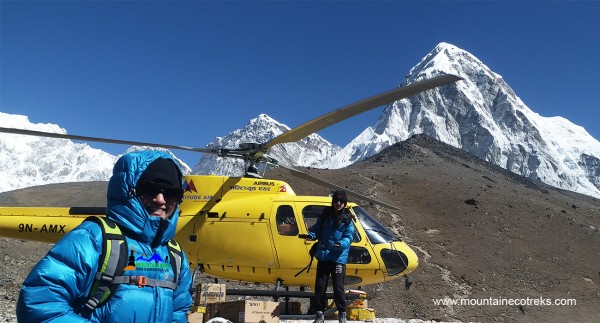
After reaching Base Camp, we opted to fly back to Lukla by helicopter, which offered breathtaking aerial views—a perfect end to our adventure. We highly recommend Mountain Eco Treks to anyone planning a Himalayan trip. Their professionalism, friendliness, and genuine passion make the journey unforgettable.
—Ines
Thomas
United Kingdom
Great Memory
19 May 2025
Our Everest Base Camp trek with Mountain Eco Treks was absolutely unforgettable. From the very first day, our group of four experienced seamless planning, clear communication, and constant support. Every detail was managed with care, turning our dream into a breathtaking, rewarding journey we will forever cherish. Trip Advisor
Communication with Mr. Ram was exceptional—fast, professional, and always helpful. His prompt responses and constant support gave us complete confidence. Every arrangement was handled efficiently, making the planning process entirely stress-free and easy to follow.
Our guide, Lokendra Rai, was outstanding. With his professional mountain climbing experience, he ensured our safety at all times while sharing valuable knowledge about the mountains. His calm leadership, expertise, and genuine care made the trek both enjoyable and educational.
When we chose to return by helicopter from Gorakshep, Mountain Eco Treks organized everything flawlessly. The flight offered breathtaking Himalayan views, providing a spectacular ending to an incredible adventure that we will never forget.
We’re already excited to return to Nepal and will definitely choose Mountain Eco Treks again. Highly recommended to anyone dreaming of an Everest Base Camp trek—thank you to the whole team for making this adventure truly unforgettable!